
VR Interactive Play Equipment for Commercial Venues
Commercial VR amusement equipment for indoor playgrounds, family entertainment centres and multi-activity venues. Select simulators, racing and shooting systems, or multiplayer free-roam VR as a dedicated technology entertainment zone.
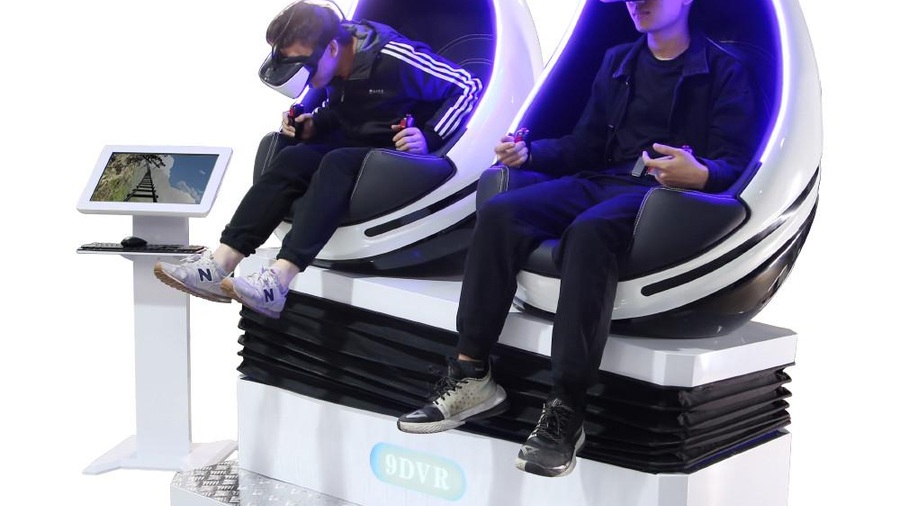
- Product category
- Commercial VR amusement equipment
- Core experience
- Virtual-reality immersion
- Formats
- Simulator, racing, shooting and free-roam
- Venue
- FEC, mall and indoor entertainment
- Scope
- Hardware, content and service model
- VR simulator products such as egg chairs, 9D cinema, flight and roller-coaster simulators.
- VR racing, shooting and interactive sports experiences.
- Multiplayer and free-roam VR arena systems.
- Commercial hardware, licensed content, operation and after-sales support.
VR Interactive Play is not a general article about virtual reality, and it is separate from interactive projection games. The purchase decision is about selecting a commercial VR equipment format, its content ecosystem, footprint, throughput and long-term service model.
Commercial VR equipment categories
| Product group | Equipment examples | Commercial format |
|---|---|---|
| VR simulators | VR Egg Chair, 9D VR Cinema, VR Flight Simulator, VR Roller Coaster | Seated or motion-platform sessions with short repeat cycles |
| VR sports and racing | VR Racing Simulator, VR Shooting Simulator, VR Sports Games | Competitive, skill-based experiences for teenagers and adults |
| Multiplayer VR | Free-Roam VR Arena, Multiplayer VR Games, VR Interactive Arena | Shared group sessions in a controlled physical play space |
VR equipment formats
VR Egg Chair
A seated motion experience suited to compact entertainment spaces and short sessions.
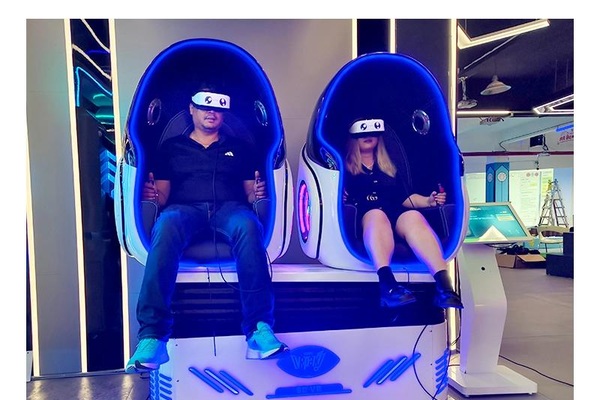
9D VR Cinema
A shared cinema-style VR format with motion and special effects, subject to final equipment specification.
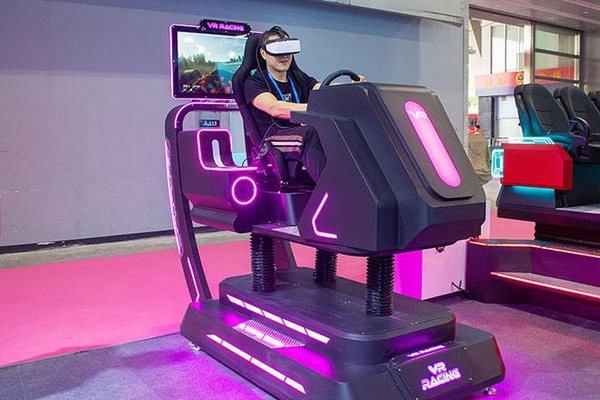
VR Racing Simulator
A competitive driving experience with a compact hardware footprint.
VR Shooting Simulator
Target and skill-based VR games for older children, teenagers and adults.
VR Pod Seats
Defined individual or multiplayer stations that simplify access, supervision and cleaning.
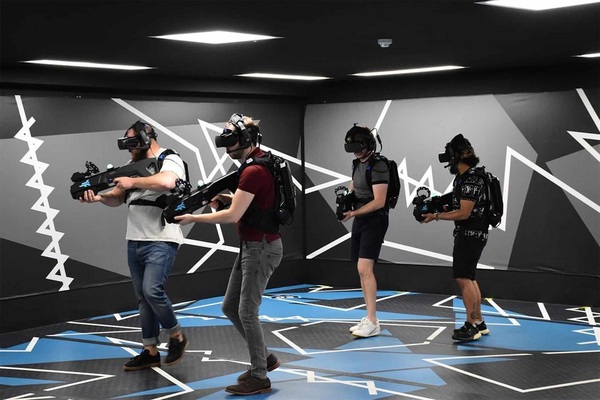
Free-Roam VR Arena
A group attraction in which players move through a controlled physical space while wearing VR equipment.
Commercial VR equipment gallery
How to choose a VR attraction
| Decision | What it affects | Information needed before quotation |
|---|---|---|
| Equipment format | Space, guest flow and ticket structure | Simulator, racing, shooting or free-roam preference |
| Hardware footprint | Room capacity and spectator space | Measured plan and clear height |
| Game content | Audience, repeat visits and licensing cost | Required game library and age suitability |
| Power and network | Technical reliability and uptime | Power capacity, internet access and cable routes |
| Staffing | Briefing, fitting, supervision and cleaning | Session length and expected visitor throughput |
| After-sales | Long-term operating cost | 보증, spare parts and local support requirements |
Operating model and integration
A commercial VR area should be designed around the full session cycle: 판매, queueing, briefing, equipment fitting, play, reset and cleaning. That cycle determines how many paid sessions and return visits the venue can realistically support.
VR can operate as a separate paid attraction, a booked event activity or one part of a mixed multi-activity destination. The final project should identify equipment, game content, software updates, data requirements, warranty, consumables and service responsibilities. Project-specific electrical, safety and local compliance requirements must be confirmed before purchase.
Frequently asked questions
What equipment is included in a commercial VR attraction?
Examples include VR egg chairs, 9D cinema simulators, racing and shooting simulators, VR pods and free-roam multiplayer arenas. The final hardware and content are confirmed in the proposal.
Is VR different from interactive sports equipment?
Yes. VR requires headsets, controllers or motion equipment to create a virtual environment. Interactive sports uses physical actions with sensors or projection to interact with a game.
How much space is required?
The footprint depends on the format. Simulator seats require a defined station area, while free-roam VR requires a larger controlled play zone and safe player movement.
Are games and software included?
Content arrangements vary. The quotation should specify the installed game library, licensing terms, updates and any ongoing software or content costs.
Can the VR zone be integrated into a family entertainment centre?
Yes. It can be integrated as a separate ticket, event attraction or mixed activity zone, subject to space, power, network, supervision and local compliance requirements.
What maintenance and support should be agreed?
Confirm equipment warranty, remote support, spare parts, cleaning procedures, software updates and local service responsibilities before placing the order.


